Thursday, 24 January 2013

Pioneer DEH-1400UB

CD RDS Tuner with WMA/MP3 Playback and Front USB

Update: Halfords upgraded my dodgy Pioneer to a superior - and 40% more expensive - Sony, free of charge! Nice customer service.

To: The Manager
Halfords

Dear Sir or Madam,

Last November my wife purchased a Pioneer car stereo, model number DEH-1400UB, from Halfords as a birthday present for me. It was later fitted, by Halfords personnel.

Fitting took a full two hours instead of one. One reason given for this was that the mechanic did not have the necessary tools to hand. When the job was eventually completed, my new car stereo appeared to work, electrically speaking; however, it seemed mechanically to be quite loosely fitted, as the right side of the unit did not appear to be fixed to the dashboard, but just flexed in and out quite freely.

The earliest opportunity we had to get this apparent fault inspected and fixed was during the Christmas holiday break, when another mechanic showed us that one of the two fixing bolts had apparently been cross-threaded and stripped - in fact he found the missing bolt within the dashboard cavity. He told us that we would have to go to our Honda dealer and order a replacement part for this. My new car stereo unit, its mounting hole having apparently been similarly stripped during the original fitting attempt, would also have to be replaced.

The replacement part arrived and we collected it from Hamilton. Still in December (I think) we returned to Halfords, brand new Honda mounting bolt in hand, to have the replacement stereo unit fitted. This time, after the requisite hour, the unit seemed to be firmly and correctly mounted.

However

We immediately noticed that the unit was prone to skipping and jumping when playing CDs. It would also cut out entirely while the car was not even moving, e.g., while parked or stopped at traffic lights. Then in January, while driving smoothly along a main road at about 10mph, i.e. no bumps, quite suddenly three of the speakers went silent, while the fourth (offside rear) jumped up in volume and became distorted. Also, the unit’s firmware appeared to have “crashed”, as none of the controls - volume up/down, band/channel change, signal source - had any effect. Fortunately the OFF function still worked.

Upon telephoning Halfords that afternoon, we were instructed to bring the car back on Monday at 2pm, to have the unit looked at.

Meanwhile, we continued to run the unit as a radio tuner with its volume turned down to zero, so that we could at least get the functionality of a dashboard clock out of it. Then on the morning of Sunday 20th I decided, while parked, to very cautiously turn up the volume. I discovered that all four speakers were working once again. However after only a few minutes of operation at this low volume, three of them packed in again, leaving only the offside rear working, with distortion, as before. This time however the unit’s firmware did not crash, and volume up/down etc. appeared still to work.

When we telephoned again at 1pm on the Monday to confirm our upcoming visit at 2pm, we were told that the shop was “fully booked” and that we would have to pick another day. The next day (Tuesday) unfortunately being unsuitable to us, we were forced to agree on 3pm, Thursday - one full week after reporting these latest faults.

Meanwhile

On Tuesday, while parked and listening to the FM radio, I noticed the station signal fade then disappear, leaving only a little faint radio noise. I nudged the frequency up then back down exactly one single notch, using the </> buttons, which caused the unit to retune correctly. This happened several times.

On Wednesday, again while parked and listening to music from my phone using the AUX input, I noticed the volume in the right side fall to zero, then return after a minute or so. This also happened at least three times.

This purchase is now two months old, and still we have been unable to get a single day of fault-free operation out of it. In fact while driving we have been forced to continue to keep its volume at zero, in case it decides spontaneously to jump up and distort again, a terrifying prospect which could easily cause a serious accident.

Having encountered such a bewildering array of faults, I am almost at a total loss to explain them - and I have a university degree in electronics! Perhaps the unit has a secret remote control, and someone is hiding in our rear seat pressing buttons at random? And I mean every single button. That might explain it...

I say “almost” because I do have a serious theory, namely: sloppy firmware programming, combined with poor power line noise suppression. But my theories are neither here nor there, and I guess you do have many other customers happily using this same model.

Just to Recap

Recent faults have included:
  • CD jumping (brand new shrinkwrapped CD, vehicle stationary)
  • Spontaneous power down (while playing brand new CD)
  • Triple speaker failure
  • Single speaker distortion
  • Complete loss of control of all functions (except power OFF)
  • Tuner jumping to a random frequency (vehicle stationary)
  • Right speakers fading (vehicle stationary)
We have completely lost all confidence in this particular manufacturer and model of car stereo.

Saturday, 29 December 2012

This is Addressed to Geoff Taylor

Of The BPI (British Recorded Music Industry)

Still in his job [sigh].

Saturday, 15 December 2012

JavaScript Programmers

I know you don't need it explained to you.

But they do.

Friday, 14 December 2012

The Speed of Jean Sibelius

At The Castle Gate

If you've watched The Sky At Night religiously since the mid 1960s, then you've seen all but a few dozen of Sir Patrick's 700+ episodes. Alas, the ones you missed will probably have to stay missing, their tapes having been wiped or thrown out, if indeed they ever existed (many episodes were simply broadcast live).

You've also heard the opening strains of Sibelius's Pelléas et Mélisande a corresponding number of times, in this recording of the Royal Philharmonic Orchestra conducted by Sir Thomas Beecham. Such long term exposure to that introduction has, you've almost certainly found, two noticeable side effects. One is perfect pitch: at the close of a hi-hat you can sing its opening chord, bell clear and literally pitch perfect, at any time of any day or night. Man, that's got to be the world's most unbelievably annoying earworm. The second effect, and the one exercising me here today, is a very strong and ingrained opinion concerning exactly what tempo the piece should be played at.

Sir Patrick's death last Sunday occurs as I'm completing the central corpus of a symphony collection, and turning to concentrate on other, equally non-vocal, classical musical forms. So naturally, I was prompted to add to the old Micro-SDXC card, this suite of incidental music written for Maurice Maeterlinck's 1892 drama of doomed infatuation. Turning to Amazon, I thought I'd spin the old amateur astronomer, virtuoso musician, composer and Krautbasher in his grave, by downloading this Deutsche Grammophon Masters recording of Berliner Philharmoniker, under the onetime Nazi maestro himself, the Austrian Herbert von Karajan.

Now, I've had plenty of speed issues with certain grand maestro composers before, most notably Herr Herbert here, but also Sir Georg Solti, Leonard Bernstein, and a few others (by contrast, I always find Daniel Barenboim perfectly to taste). But sweet mother of Adolf, nothing in the history of music could ever have prepared me ever for the glacial interminability of this treatment, ever. Whatever the merits of the rest of the suite, that first geologically grinding movement is bloody unlistenable.

What's the Frequency?

Clearly at this point I had to know which was "right", in the sense of being closer to the composer's original intention. Because, you know, that can change everything. If this impossibly, inhumanly lento melodrama corresponded more faithfully to the thoughts of Jean Sibelius, then I'd just have to learn to live without Beecham's much more familiar dancefloor aerobic workout. Luckily we can decide these things independently. On Sibelius's original score, there's a tempo command specifying
which is to say: serious and ... widely? ... expansively I guess, with 48 minims (half-notes) per minute. The time signature is 2:2, so there are two minims in a bar, and the piece comprises 60 bars in total, with no repeats. Oh wait, two of those bars are in 3:2 time - Jean, you crafty devil! - so we'll call it 61 equivalent bars of 2:2 to compensate. That's a grand total of 122 minims, which at a mean frequency of 48 per minute, should take just 2 minutes and 32½ seconds to play.

Run time of the Karajan recording: six minutes dead.

Conclusion

So that settles it then. Just as I'd suspected, Herbert von Karajan was a grandstanding, temporising, scene-stealing, attention-seeking hack of a drama queen. Yes, I have indeed wasted my money with this purchase. And yet...

The funny thing is, once I found the score and followed it along with the music, this interpretation really started to grow on me. And you know, even the canonical Beecham stretched it out to 3½ minutes.

Wednesday, 5 December 2012

SA1503: CurlyBracketsMustNotBeOmitted (Part 1)

Parenthetical Remarks

StyleCop rule SA1503 is designed to complain whenever
The opening and closing curly brackets for a C# statement have been omitted.
What does this mean, and is it a good rule?

Syntactic Structures

In C#, the bodies (or consequents) of certain flow control and looping constructs, such as if, while, and for statements, can syntactically be any single statement. For example, the underlined statements below are all single-statement bodies:
if (x == 1)
  y = 2;
else
  z = 3;

while (x < 10)
  x++;

for (var i = 0; i < 10; i++)
  x *= i;
Obviously there are times when you want the body of your construct to contain, rather than a single atomic statement, a sequence of two or more such statements. This is accommodated by the use a special type of single statement called a block, comprising just the required sequence of statements enclosed in curly braces, as shown below. Note that the entire contents of the curly braces, including the braces themselves, still comprise a single statement - which just happens to be of the block type:
if (x == 1)
{
  y = 2;
  z = 3;
}
These flow control and looping constructs can be nested within one another. A simple example of such nesting is this:
if (A())
  if (B())
    C();
  else
    D();
Since the rule in C# is that an else clause gets associated with the nearest available if statement, the else in this example has been indented to line up correctly with the second if statement, to which it properly belongs.

Problem?

Some people point out that the indentation can be applied incorrectly, and that the resultant statement
if (A())
  if (B())
    C();
else
  D();
can be ambiguous. Of course it's not ambiguous; after all, the compiler has absolutely no problem in applying the correct rules of precedence in a case like this, and coming up with the one correct result. However, it is true to say the above example is confusing, since it looks as though the else clause refers back to the first if statement rather than matching the second. The obvious remedy is to correct the indentation - and in fact to enforce consistent and correct indentation in future, so that such confusion cannot occur.

A Bad Fix

Sadly, those same people who insist on allowing badly formed indentation to pollute their code, often compound their error by suggesting a rather odd way of fixing it. Simply disallow any statement type except a block in these contexts! The result is a proliferation of brackets:
if (A())
{
  if (B())
  {
    C();
  }
  else
  {
    D();
  }
}
Although much harder to read, this version does at least have the virtue that its intention is quite clear. However, that clarity has not come about from the addition of braces. No, the alignment of the braces merely served to highlight the indentation error which was causing the confusion, and which incidentally has also been corrected in this latest version. Correct the indentation and we remove the confusion, braces or none. If anything, the braces are making it more difficult to follow the structure of nested statements like these, by making them twice as tall as they need be, and physically separating the components that you're trying to line up visually.

Another Example

In the above referenced documentation of rule SA1503, the following example is given:
if (true)
  this.value = 2;      
  return this.value;

Glancing at this code, it appears as if both the assignment statement and the return statement are children of the if-statement. In fact, this is not true. Only the assignment statement is a child of the if-statement, and the return statement will always execute regardless of the outcome of the if-statement.
Okay, so far I'm agreeing with you. But sadly we soon descend into nonsense:
StyleCop always requires the opening and closing curly brackets to be present, to prevent these kinds of errors:

if (true)
{
  this.value = 2;      
  return this.value;
}
Yeah, no. Now this so-called example lacks any credibility. Look, if that first fragment compiles, the one without the braces, then it must be sitting at the very end of its enclosing method - because it ends with an unconditional return, anything after which is unreachable code. Which of course you're already detecting, and in fact treating as an error, right? Right, so it's the last thing in the method. But this means that the second version can't compile at all, since there needs to be another unconditional return statement after it; the compiler will be justly livid about its absence (not all paths return a value, nag nag nag...).

Preliminary Conclusion

When I started looking into this issue, I was inclined to accept switching on rule SA1503. Anecdotal evidence seemed to support the idea that it could prevent bugs. And then, for me at least, there was this clincher: even Eric Lippert appeared to be suggesting that compulsory braces represented a solution to the classic dangling else problem, and one which he wished had been applied to C# from day one!

Then I realised that SA1503 wanted to do much more than just enforce braces in an if statement where an else clause was present. It wanted braces everywhere! That was when I began to pay closer attention to the arguments being offered, both for and against the measure.

The faulty examples above are typical of much I've encountered in researching what now appears to me a particularly misguided and ineffectual StyleCop rule. In seeking to mitigate against bad code layout by making wholesale changes to its syntactic structure, we not only miss our target entirely, but find ourselves instead lowering the code quality and readability. SA1503 therefore seems a bad rule from this perspective.

Next time: quick edits & legacy code.

Thursday, 29 November 2012

Your Feature Has Been Cancelled

Or At Least Postponed

Surely that calls for a Rage Comic? I suppose we'll find out next summer, whether there's still going to be any appetite for an Office 2007 style user interface.


Maybe the more interesting question is, will there even be a desktop then?!

Friday, 2 November 2012

VUPEN Pwns Windows 8 & IE10

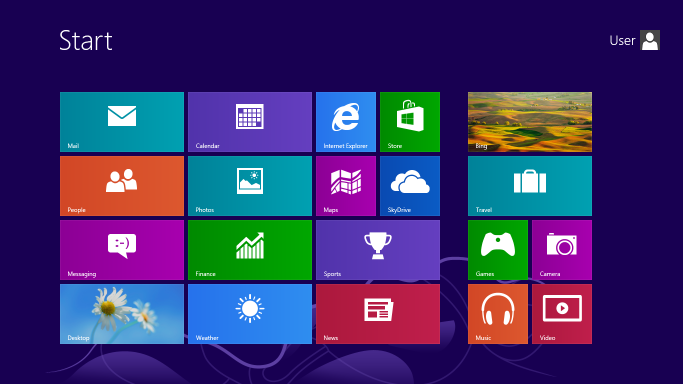
Windows 8 (used with permission from Microsoft)
Windows 8 is pwned. IE10 is pwned.

Yes, already. But you're unlikely to hear much in the way of detailed descriptions of the multiple, preexisting zero-day vulnerabilities chained together to effect these new ones. That's because their discoverer is essentially a black hat: the French security firm VUPEN.

With all the talk about cyber security, cyber wars, and preemptive legislation coming from ploiticos east and west, you might have thought that governments would be among the first, and most willing, to condemn and criminalize a company like VUPEN. This is an organization whose business model is to discover security holes in the products of giants like Microsoft, Google, or Apple, then rather than disclose these flaws for patching, sell the information to the highest bidder for use in arbitrary attacks.

Follow The Money

Patching would make everybody safer, and increase our confidence in the various devices and services we have to use every day, but it doesn't carry the same high financial rewards as selling your knowledge to whomever wants to exploit it most. Meanwhile, those governments we rely on to make the best choices for us, to legislate and protect us, yada yada... well it turns out, those are exactly the kind of people who most desire the ability to intercept, spy on, record, even to corrupt or otherwise modify, our communications, activities, and sundry interactions with others. And, of course, they have the resources to get themselves into that highest bidders' club.

So today, we learn that Microsoft's best, most advanced and up to date security features are broken. VUPEN is already advertising and selling malware kits offering the buyer exclusive access to everything on your Windows 8 machine. Worst of all, Microsoft will probably remain unable to patch these vulnerabilities, whose nature is so closely guarded by the baddies. On the other hand, that does limit the number of agents able to exploit these holes - you might see that as a kind of mitigation.

Hat tip: TheNextWeb